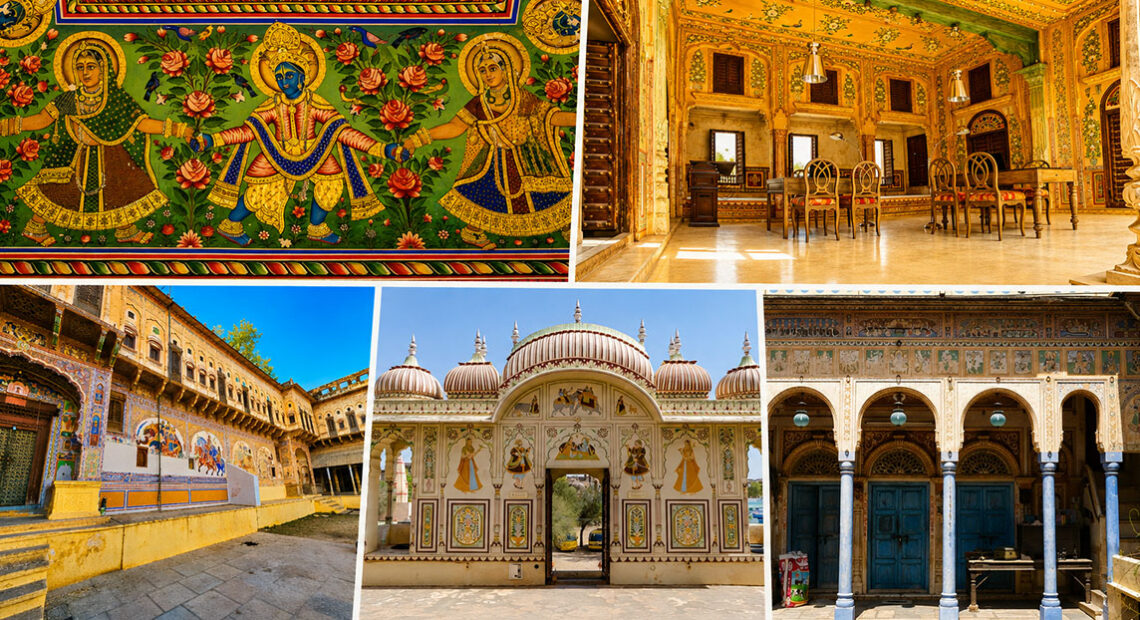

If you have ever scrolled through pictures of Rajasthan and paused at a wall covered in faded blue elephants, turbaned merchants, and steam trains painted a hundred years ago, chances are you were looking at a haveli from Mandawa. This Mandawa travel guide explores that unique experience — Mandawa is tucked away in the Shekhawati region of Rajasthan and is known for its Rajasthan haveli heritage, art, architecture, and old-world charm. Often called the “Open Art Gallery of Rajasthan,” the town’s narrow lanes are filled with beautifully painted Shekhawati havelis that make Mandawa one of the state’s most fascinating heritage destinations.
This Mandawa travel guide is designed for travelers who want more than a simple checklist. It covers Mandawa’s history, famous havelis, practical travel information, food, shopping, and popular things to do in Mandawa. Whether you are planning a day trip from Jaipur or a relaxed two-day heritage walk, this guide will help you make the most of your visit.
Mandawa: Where History Meets Art
Mandawa is a fascinating heritage town in Rajasthan’s Shekhawati region, where centuries-old history comes alive through colorful frescoes, grand havelis, and traditional architecture. Its historic streets are lined with beautifully painted buildings that reflect the artistic vision and prosperous lifestyle of the merchant families who once lived here.
The frescoes tell stories from different eras. Alongside religious and mythological scenes, visitors can find glimpses of everyday life, royal traditions, trade, and changing influences from the outside world. Walking through the old town offers an opportunity to appreciate Rajasthan’s artistic traditions while discovering the history behind its remarkable havelis.
Today, Mandawa is an appealing destination for travelers interested in Rajasthan’s heritage, architecture, art, and culture away from the state’s busier tourist centers.
A Brief History of Mandawa Rajasthan
Mandawa’s history is closely connected with the development of the Shekhawati region and its historic trade routes. The town was established by the Shekhawat Rajputs in the mid-18th century and gradually developed into an important settlement for merchants and traders.
The Origins of Mandawa
Local traditions associate the development of Mandawa with Thakur Nawal Singh, who built Mandawa Castle as a fortified center for the settlement. The fort became an important landmark around which the town gradually developed.
The name Mandawa also has an interesting history. Regional accounts associate the settlement with earlier names such as “Mandu ki Dhani” and “Manduwas,” which gradually evolved into names including “Manduwa,” “Mandwa,” and eventually “Mandawa.”
The Rise of the Shekhawati Havelis
During the 19th century, wealthy Marwari merchant families invested heavily in their hometowns. They built elaborate havelis decorated with detailed frescoes covering walls, ceilings, arches, entrances, and courtyards.
These paintings included religious figures, folk stories, hunting scenes, British officers, trains, motorcars, and hot-air balloons. The combination of traditional Indian themes with newer influences reflected the changing world of the merchants who traveled widely for business.
This artistic tradition spread across the wider Shekhawati region and helped establish its reputation for spectacular painted havelis and frescoes.
Mandawa’s Cultural Legacy
Mandawa also has a connection with music. The famous ghazal singer Mehdi Hassan was born in the town, adding another interesting layer to Mandawa’s cultural heritage.
A Walk Through Mandawa’s Historic Havelis
Unlike a traditional museum where artworks are displayed behind glass, Mandawa’s artistic heritage can be found throughout the town. Frescoes decorate exterior walls, doorways, courtyards, staircases, and entrances, where they have been exposed to sunlight, dust, and time.
Many of the old havelis feature faded paintings, peeling colors, carved details, and traditional latticed windows. These signs of age add to the historic character of the town and offer visitors a glimpse into its changing past.
Walking through Mandawa feels less like ordinary sightseeing and more like exploring an open-air gallery. Every narrow lane can reveal another decorated doorway, colorful fresco, or beautifully preserved courtyard, making the heritage walk one of the most memorable things to do in Mandawa.
Top Havelis to Visit in Mandawa (Best Shekhawati Havelis)
No Mandawa travel guide is complete without a proper list of the best Mandawa havelis. Mandawa has dozens of Shekhawati havelis, some open to visitors, some converted into heritage hotels, and some still privately owned but with exteriors you can admire from the street. Here are the top places to visit in Mandawa if haveli architecture is your priority.
Castle Mandawa
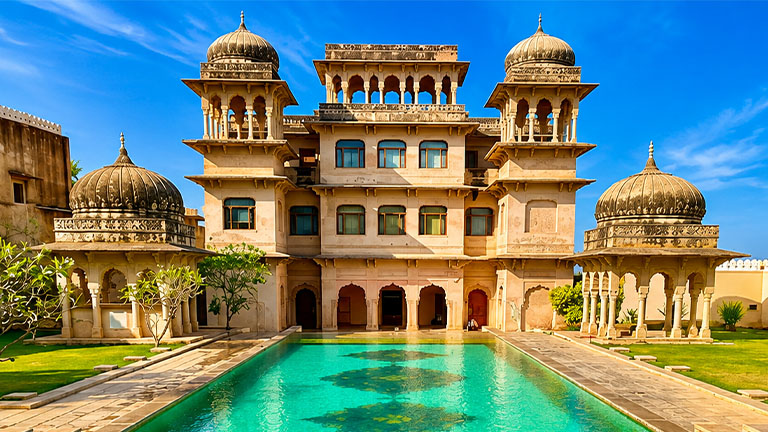
This is the town’s centerpiece. Built in the 18th century as a fortified residence for the ruling family, it has since been converted into one of Rajasthan’s well-known heritage hotels. Its interior mosaic and mirror work draws inspiration from the Sheesh Mahal of Amber Fort, and it now houses a garden, pool, spa, and restaurant — but even if you are not staying there, it is worth a walk-through for its architecture alone.
Murmuria Haveli
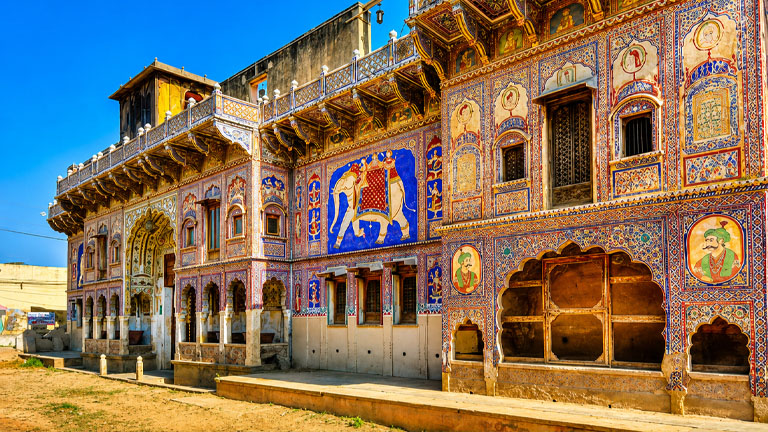
Known for frescoes that blend traditional mythology with European influences — you will spot depictions of British-era motorcars, aeroplanes, and colonial officers alongside more conventional Hindu religious scenes. It is one of the clearest examples of how global trade exposure shaped local art.
Goenka Haveli (Double Haveli)
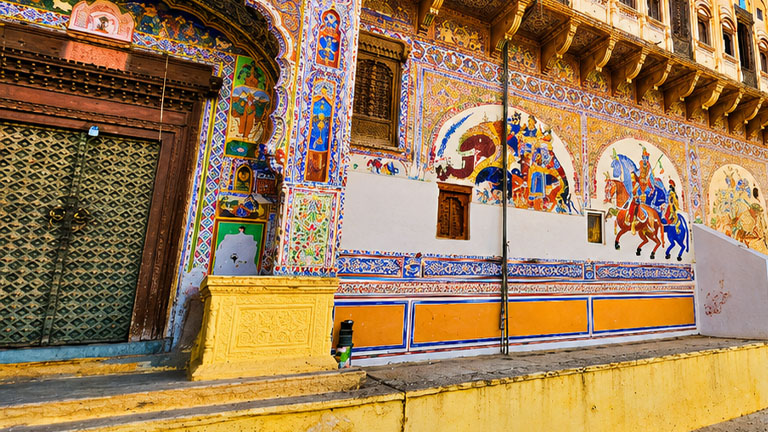
One of the most photographed havelis in Mandawa because of its sheer scale — it is actually two connected havelis built by the same family, with mirrored facades that make for a striking symmetrical photograph.
Gulab Rai Ladia Haveli
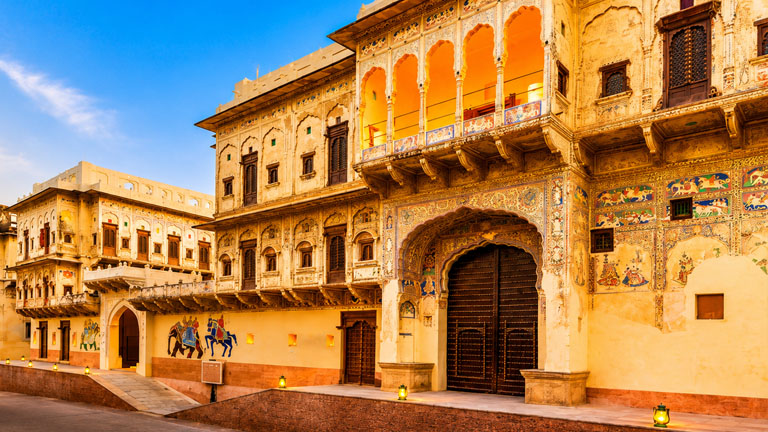
Famous for panels depicting steam trains, European ladies in gowns, and local folk dancers on the same wall — a reminder of how quickly the modern world was arriving in even the smaller Indian trading towns of that era.
Chowkhani Haveli and Saraf Haveli
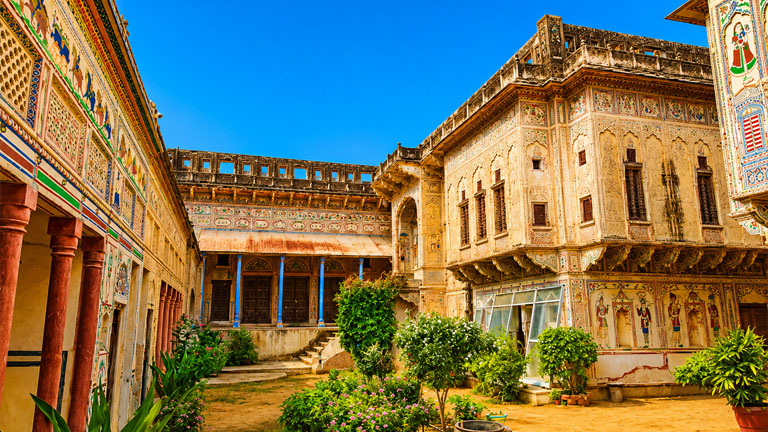
Both are excellent examples of the erotic and mythological fresco panels typical of Shekhawati havelis, alongside more everyday scenes of trade, farming, and family life. These smaller havelis are less crowded than Castle Mandawa, making them ideal if you want quieter photographs.
Understanding the Frescoes: What the Paintings Actually Mean
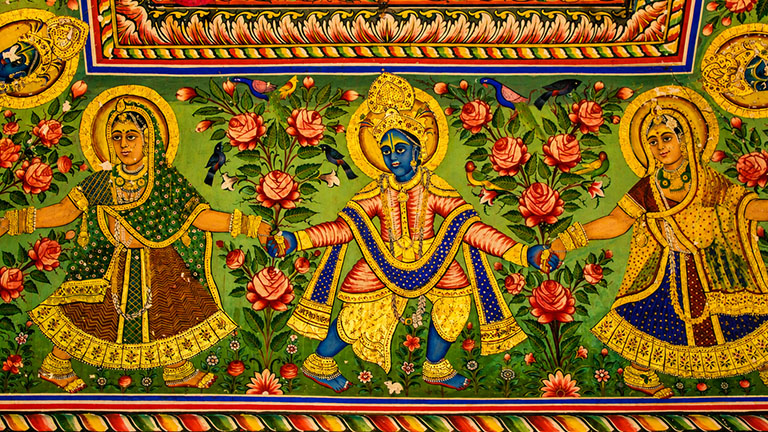
To truly appreciate Mandawa, it helps to know what you’re actually looking at when you stand in front of a painted wall, because these frescoes are not just decoration — they are a visual diary of a changing world.
Religious and Mythological Stories
The earliest layers of art on Mandawa’s havelis, dating to the mid-1700s, lean heavily on religious and mythological themes: scenes from the Ramayana and Mahabharata, depictions of Krishna and Radha, and images of local deities. Natural pigments made from indigo, lime, lampblack, and ochre gave these early works their characteristic earthy, muted tones.
European Influence on Mandawa Frescoes
As the 19th century progressed and merchant families began traveling further for trade — first across India, then increasingly interacting with British colonial infrastructure — the subject matter shifted dramatically. You will notice steam trains chugging across walls that also depict Hindu gods, British officers in uniform standing beside folk dancers, early motorcars parked next to elephant processions, and even hot air balloons floating above scenes of rural life.
Everyday Life and Cultural Stories
Look closely and you will also find more playful and even erotic panels tucked into inner courtyards, a common feature across Shekhawati havelis, alongside scenes of everyday life — farming, weddings, festivals, and trade caravans. Together, these layers make each haveli a kind of visual timeline.
Beyond the Havelis: Other Things to Do in Mandawa
While havelis are the headline attraction of any Mandawa travel guide, this Rajasthan haveli heritage town has more to offer than painted walls. Here are more places to visit in Mandawa beyond the mansions.
Mandawa Fort — The fort that started it all, now functioning as a heritage hotel but still worth admiring from the town square, especially at sunset when the sandstone glows orange.
Thakurji Temple — A historic shrine dedicated to Lord Krishna, tucked into the older part of town and worth a quiet visit if you want a break from haveli-hopping.
The Old Community Well — A well that, according to local legend, was built as a communal bathing spot with separate sections for men and women — a small but interesting stop that reflects the town’s older social customs.
Sunset Point / Camel Safari — Mandawa sits close enough to the Thar Desert’s edge that many hotels arrange short camel or jeep safaris into the surrounding dunes for sunset views, a nice contrast after a day spent in narrow stone lanes.
Nearby Shekhawati Towns — If you have extra time, Nawalgarh, Fatehpur, and Ramgarh are all within a short drive and have their own impressive haveli clusters, making Mandawa a good base for a broader Shekhawati circuit.
Best Time to Visit Mandawa Rajasthan
Timing is one of the most searched parts of any Mandawa travel guide. Mandawa has a semi-arid climate with genuinely hot summers, so timing your trip matters more here than in many other parts of India.
- October to March is unanimously recommended as the best window, with pleasant weather that makes it ideal for sightseeing and walking around outdoors.
- December and January bring the coolest temperatures, sometimes dropping quite low at night, so carry a light jacket if you’re visiting during this stretch.
- April to June gets extremely hot, with daytime temperatures regularly crossing 40°C, making it a tough time for a walking tour of the town.
- July to September, the monsoon months, are considered a reasonably pleasant alternative by some seasoned travelers, since rain softens the desert heat, though this is a less conventional time to visit.
If your trip coincides with Holi, Diwali, or Teej, you are in for a bonus — Mandawa celebrates these festivals with visible enthusiasm, and the town’s havelis and streets often see extra decoration and local cultural activity around these dates.
How to Reach Mandawa: A Quick Mandawa Travel Guide Checklist
By Air: The nearest major airport is Jaipur International Airport, roughly 170–190 km away, from where you can hire a taxi or take a bus. Delhi’s airport is also a workable option for travelers combining Mandawa with a Delhi–Jaipur–Shekhawati loop.
By Rail: The nearest railway station to Mandawa is Madhavpur, located about 2 km from the town, though many travelers also route via Jhunjhunu or Sikar depending on train availability from their city of origin.
By Road: Mandawa is well connected by a network of state and national highways, and self-drive or hired-taxi journeys from Jaipur, Delhi, or Bikaner are common. The Delhi–Mandawa drive typically takes around 6–7 hours, which is why many travelers treat it as an overnight halt on longer Rajasthan road trips rather than a single-day round trip.
Once in Mandawa, the town itself is small enough to explore almost entirely on foot — in fact, walking is the best way to appreciate the havelis, since cars can’t access many of the narrower lanes where the most interesting facades are found.
Where to Stay in Mandawa
Any complete Mandawa Travel Guide needs a solid hotel section, and one of the best things about Mandawa is that many of its heritage buildings double as hotels, so you can actually sleep inside a piece of the history you came to see.
- Castle Mandawa — The most iconic option, offering a genuine fort-stay experience with a pool, spa, and in-house restaurant serving Rajasthani cuisine.
- Vivaana Culture Hotel — A restored 19th-century twin haveli with a boutique feel, an in-house museum, spa, and pool.
- Radhika Haveli Hotel — Known for its rooftop terrace with panoramic views over the town, popular for sunset viewing.
- Hotel Mandawa Haveli — A mid-range heritage stay option with intricately painted interiors and a restaurant serving local specialties.
Budget travelers will also find simpler guesthouses near Mandawa Road, while those wanting a splurge should book heritage hotel rooms well in advance, especially during the October–March peak season.
What to Eat in Mandawa
No Mandawa Travel Guide is complete without food, and Rajasthani cuisine here leans hearty, spiced, and built for desert living, where refrigeration was historically scarce and ingredients had to last. Dishes worth trying include:
- Dal Baati Churma — Baked wheat balls served with lentils and a sweet crumbled wheat-and-jaggery dish, arguably Rajasthan’s most iconic meal.
- Gatte Ki Sabzi — Gram-flour dumplings simmered in a spiced yogurt-based curry.
- Ker Sangri — A traditional dry-region vegetable preparation made from desert beans and berries, unique to this part of India.
- Laal Maas — A fiery, red-chili-based mutton curry for non-vegetarian travelers looking for something bold.
- Rabri — A thickened, sweetened milk dessert, perfect after a long day of walking in the heat.
Most heritage hotels serve a set Rajasthani thali in the evening, often accompanied by folk music performances — worth experiencing at least once during your stay.
Shopping in Mandawa
Popular things to shop for in Mandawa include glass bangles, dyed fabrics, wooden furniture, handicraft products, and historical-style paintings — many of which are made by local artisans continuing the same traditions visible on the haveli walls themselves. Small shops near the main market and around Mandawa Fort are good places to browse for block-printed textiles and miniature reproductions of haveli frescoes, which make for genuinely memorable souvenirs.
Practical Travel Tips for Mandawa
- Wear comfortable shoes. You will be walking on uneven stone lanes far more than you expect.
- Carry cash. Smaller shops and some haveli caretakers may not accept cards.
- Hire a local guide for at least half a day. Many havelis are only accessible if you know which gate to knock on, and guides can share stories and symbolism you would otherwise miss entirely.
- Dress modestly and carry cotton clothing in summer, since temperatures can be extreme between April and June.
- Photography etiquette matters. Many havelis are still private residences — always ask before photographing interiors or residents.
- Start early. Havelis are easier to photograph in the soft morning light, and walking is far more comfortable before the midday heat sets in.
Plan Your Rajasthan Trip with Us
Discover Mandawa’s historic havelis and experience more of Rajasthan with a personalized travel plan designed around your interests.
Enquire Now
Frequently Asked Questions (FAQs)
Mandawa is famous for its historic havelis covered in intricate frescoes and murals, earning it the nickname “Open Art Gallery of Rajasthan.
Mandawa is roughly 170–190 km from Jaipur, and the drive typically takes around 3 to 4 hours by road.
October to March is the best window, offering pleasant, walkable weather for sightseeing.
Yes, one day is enough to cover the major havelis and landmarks, though two days allow for a more relaxed, in-depth heritage walk.
Yes — Castle Mandawa and Vivaana Culture Hotel are among the well-known heritage properties offering a luxury haveli-stay experience.
Don’t miss Dal Baati Churma, Gatte Ki Sabzi, Ker Sangri, Laal Maas, and Rabri for a proper taste of Rajasthani cuisine.
Both. Its small size, walkable lanes, and heritage hotel stays make it comfortable for solo travelers, while families will appreciate the pools, safaris, and cultural evenings offered by most properties.
Yes. Nawalgarh, Fatehpur, and Ramgarh are all within an hour or two of Mandawa by road and can easily be combined into a broader Shekhawati heritage circuit if you have three days or more.
You can explore the main streets and exteriors on your own, but many of the more interesting havelis are only accessible with a local guide who knows the caretakers, so a guide is highly recommended if you want to see interiors rather than just facades.