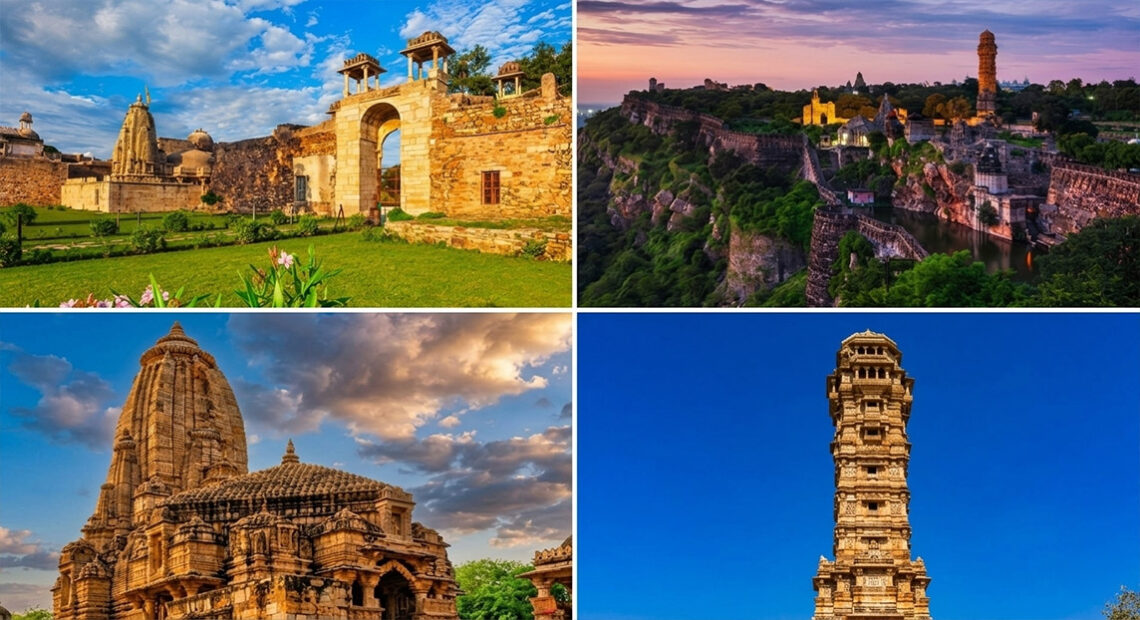
Rajasthan is a land of grand forts, royal palaces, ancient temples, and stories that have survived for centuries. Among its many historic destinations, Chittorgarh stands apart for its deep connection with the royal history of Mewar. The city is known for its magnificent fort, legendary Rajput rulers, historic battles, religious traditions, and remarkable architectural heritage.
Chittorgarh was once the capital of the Mewar kingdom and served as an important centre of Rajput power. Its history is closely connected with rulers such as Rana Kumbha and Maharana Pratap, while legendary figures such as Rani Padmini and Meera Bai have also become an important part of the city’s cultural identity.
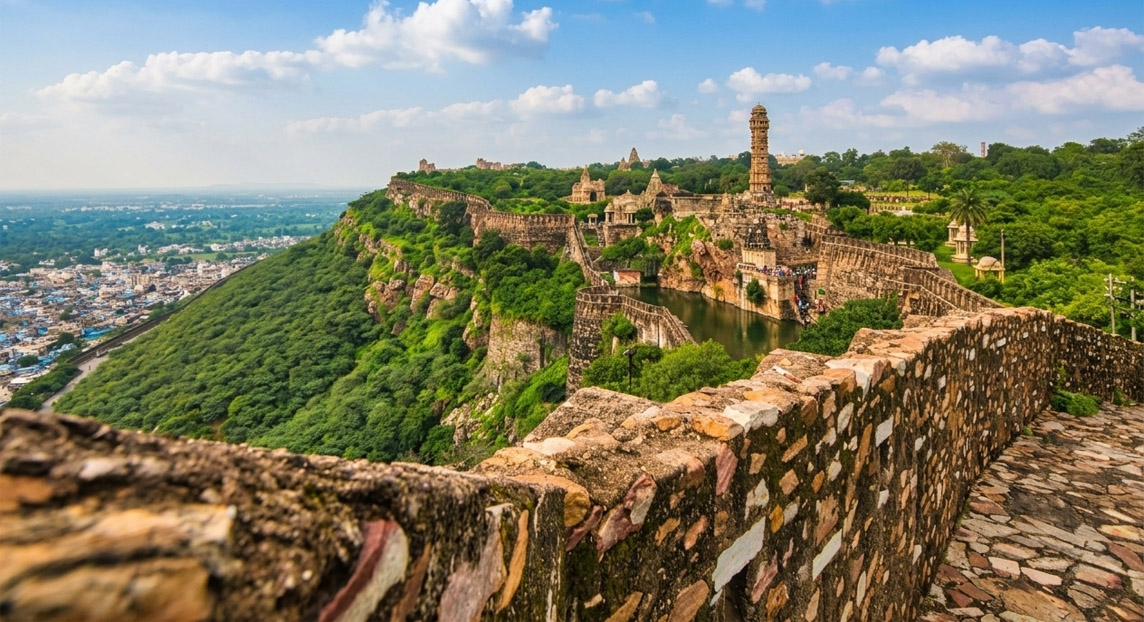
At the centre of this heritage is Chittorgarh Fort, a vast historic complex filled with palaces, temples, towers, gates, reservoirs, and ruins. Every structure offers a different glimpse into the life and history of medieval Mewar.
For travellers interested in Rajasthan’s royal past, Chittorgarh offers much more than beautiful architecture. It provides an opportunity to understand the traditions, conflicts, achievements, and cultural values that shaped one of India’s most fascinating historic regions.
Chittorgarh and the Rise of Mewar
The story of Chittorgarh is closely connected with the history of Mewar, one of the most prominent Rajput kingdoms of Rajasthan. For centuries, the region was ruled by Rajput dynasties that developed a strong political and cultural identity.
Chittorgarh’s location made it strategically important. The fort was established on a high hill, giving its rulers a strong defensive position and allowing them to oversee the surrounding landscape.
The fortified settlement gradually developed into a major political centre. Within its walls were royal residences, temples, water reservoirs, administrative spaces, and other structures necessary for a large population.
The rulers of Mewar faced repeated conflicts with neighbouring kingdoms and powerful invading forces. These struggles became an important part of the historical identity of Chittorgarh.
However, the history of Mewar was not only about warfare. The rulers also supported architecture, religion, literature, music, and other cultural traditions. The surviving monuments of Chittorgarh reflect this combination of military strength and artistic expression.
Chittorgarh Fort: The Centre of Royal Power
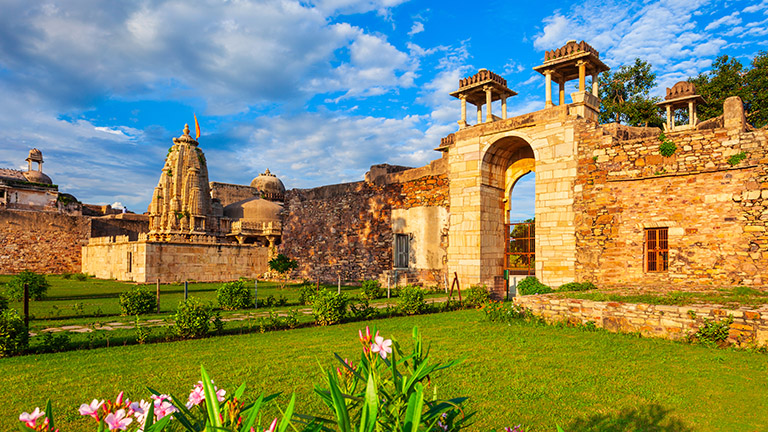
Chittorgarh Fort is undoubtedly the most important historical landmark in the city. Built across a large hill, the fort contains an extraordinary collection of monuments representing different periods of Mewar’s history.
The fort’s enormous walls, gateways, towers, temples, palaces, and water structures demonstrate the scale of the settlement that once existed here.
The entrance to the fort passes through several historic gates. These gateways were not simply entrances; they formed part of the defensive system designed to protect the settlement from attacks.
Inside the fort, visitors can find monuments associated with rulers, religious figures, and historical events. Some structures remain relatively well preserved, while others survive as ruins.
The combination of monumental architecture and ruined structures gives Chittorgarh its unique character. The remains allow visitors to imagine how the fort may have looked when it functioned as the political heart of Mewar.
Rana Kumbha and the Golden Age of Architecture
Among the rulers associated with Chittorgarh, Rana Kumbha holds an important position. His reign is remembered for military achievements as well as significant contributions to architecture and culture.
During his period, several important structures were constructed or developed within the fort. The architectural remains from this period demonstrate the artistic skill and engineering knowledge of medieval Rajasthan.
One of the most famous monuments connected with Rana Kumbha is Vijay Stambh.
The tower is a remarkable example of detailed stone carving and monumental architecture. Its walls contain numerous sculptures, decorative elements, and inscriptions.
Rana Kumbha’s contribution to Chittorgarh demonstrates that the rulers of Mewar used architecture not only for practical purposes but also to celebrate achievements, express religious beliefs, and establish a lasting royal legacy.
Vijay Stambh: A Monument of Victory
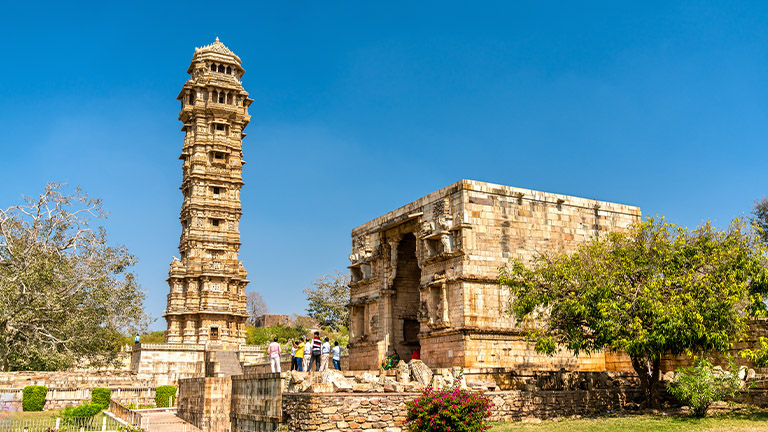
Vijay Stambh, commonly known as the Victory Tower, is one of the most recognisable structures inside Chittorgarh Fort.
The tower was constructed during the reign of Rana Kumbha and is traditionally associated with a military victory. Its height and elaborate decoration make it one of the most impressive monuments in the fort.
The tower contains detailed carvings of Hindu deities, figures, ornamental designs, and inscriptions. The craftsmanship reflects the artistic traditions of medieval Rajasthan.
Beyond its architectural beauty, Vijay Stambh represents the way historical rulers commemorated important events through monumental construction.
The tower remains one of the strongest visual symbols of Chittorgarh’s royal heritage.
Kirti Stambh and the Religious Diversity of Chittorgarh
Kirti Stambh, or the Tower of Fame, offers a different perspective on the history of Chittorgarh.
The tower is associated with Jain traditions and contains numerous sculptures connected with Jain religious beliefs. Its presence within the fort demonstrates that Chittorgarh was also a centre of religious and cultural activity.
The contrast between Kirti Stambh and Vijay Stambh is particularly interesting. While both are monumental towers, they represent different aspects of the society that developed within the fort.
Together, these structures show that Chittorgarh’s heritage cannot be understood only through its battles and rulers. Religion, art, craftsmanship, and spiritual traditions were also important parts of life in medieval Mewar.
Rana Kumbha Palace and the Royal Life of Mewar
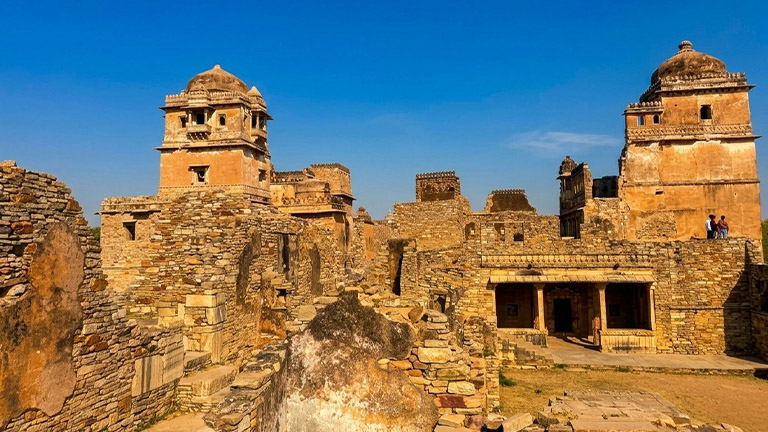
The remains of Rana Kumbha Palace provide another glimpse into the royal history of Chittorgarh.
Although the palace complex is now largely in ruins, its remaining structures reveal the scale of the royal settlement that once existed inside the fort.
Palaces in medieval Rajasthan were not simply places where kings lived. They were also centres of administration, ceremonies, political meetings, and royal activities.
The ruins of Rana Kumbha Palace help visitors understand how extensive the royal complex of Chittorgarh once was.
The site is also connected with several traditional stories from the history of Mewar, making it an important stop for those interested in understanding the royal environment of the fort.
Rani Padmini and the Legend of Chittorgarh
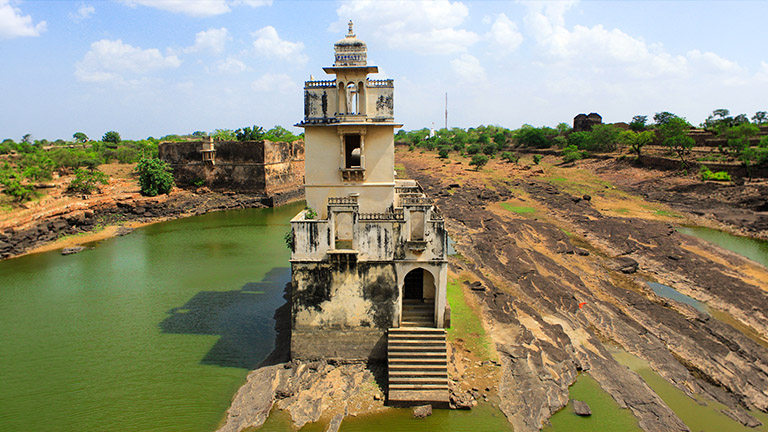
The story of Rani Padmini is among the most famous legends associated with Chittorgarh.
According to traditional accounts, Rani Padmini was the queen of Ratan Singh, the ruler of Chittorgarh. Her story later became associated with the siege of Chittorgarh by Alauddin Khalji in 1303.
The popular version of the story has been shaped by later literary traditions and folklore. Historians have debated the historical details and the extent to which later accounts reflect events of the period.
This distinction is important when exploring Chittorgarh because the city contains both documented historical events and powerful legends that have developed over centuries.
Padmini Palace is traditionally associated with the story of Rani Padmini and remains one of the most discussed structures within the fort.
Whether viewed as history, legend, or cultural tradition, the story has played a major role in shaping the popular image of Chittorgarh.
The Three Major Sieges of Chittorgarh
The history of Chittorgarh Fort is marked by three major sieges that had a lasting impact on Mewar.
The first major siege took place in 1303 when Alauddin Khalji attacked Chittorgarh. The event later became closely connected with the popular traditions surrounding Rani Padmini.
The second major siege occurred in 1535 when Bahadur Shah of Gujarat attacked the fort. This was another major crisis for the kingdom and became part of the long history of conflict surrounding Chittorgarh.
The third major siege came in 1567–1568, when the Mughal emperor Akbar attacked the fort. The fall of Chittorgarh during this campaign marked a major turning point in the political history of Mewar.
These three sieges are remembered not only because of their military significance but also because of the stories of courage, sacrifice, and survival associated with them.
The Story of Jauhar and Historical Memory
Chittorgarh is frequently associated with the historical tradition of Jauhar.
Jauhar refers to a practice described in historical accounts in which women are said to have collectively entered fire when defeat in warfare appeared unavoidable and capture was feared.
The tradition became particularly associated with the sieges of Chittorgarh. Stories connected with Jauhar have been preserved through local traditions, literature, and historical narratives.
Today, these events are better understood within the difficult social and military circumstances of medieval warfare. They represent a tragic part of the history of the fort rather than simply a heroic legend.
Understanding this context helps visitors approach Chittorgarh’s history with greater awareness of the human experiences behind the stories.
Meera Bai and the Spiritual Side of Chittorgarh
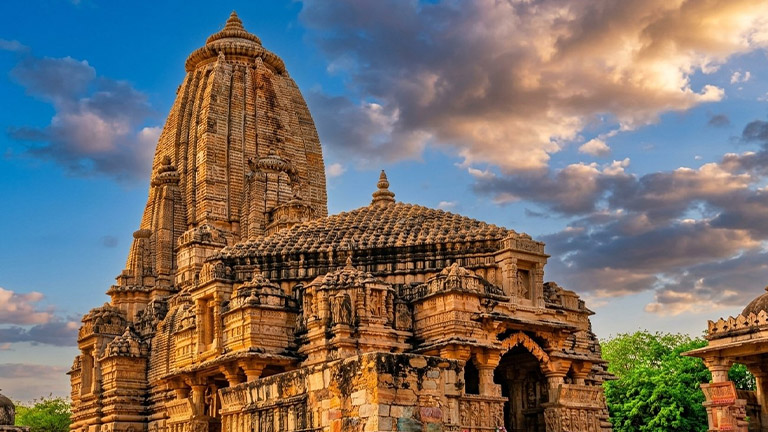
While Chittorgarh is often remembered for battles and Rajput rulers, its history also has a strong spiritual dimension.
The city is associated with Meera Bai, one of India’s most famous devotional poets.
Meera Bai was connected with the Rajput royal family and became renowned for her devotion to Lord Krishna. Her devotional poetry became an important part of the Bhakti tradition.
The Meera Temple inside Chittorgarh Fort is associated with her legacy.
Her connection with Chittorgarh offers a completely different perspective on the fort’s history. Instead of focusing on warfare and political power, it highlights devotion, poetry, music, and spirituality.
Her songs and verses continue to be performed and remembered across India, making her one of the most enduring cultural figures connected with Mewar.
Kalika Mata Temple
The Kalika Mata Temple is another important religious landmark inside Chittorgarh Fort.
Dedicated to Goddess Kali, the temple reflects the strong religious traditions that existed within the Mewar kingdom.
The temple’s historic setting and architectural elements make it an important part of the fort complex.
Its presence also demonstrates that Chittorgarh was designed as more than a military stronghold. It was a living settlement where people worshipped, worked, lived, and participated in royal and cultural activities.
Temples such as this one help explain the close connection between religion and everyday life in medieval Rajasthan.
The Water System of Chittorgarh Fort
One of the lesser-known but fascinating aspects of Chittorgarh Fort is its traditional water management system.
A large fortified settlement required a reliable supply of water, particularly during periods when the fort could be surrounded by enemy forces.
For this reason, the fort historically contained numerous reservoirs, wells, ponds, and other water sources.
These structures demonstrate the importance of planning and engineering in medieval fortified cities.
The water system also reflects how the builders adapted the fort to its geographical surroundings. Managing water within a large hilltop settlement was essential for supporting residents and maintaining the fort during long periods of conflict.
The surviving water structures therefore form an important but sometimes overlooked part of Chittorgarh’s heritage.
The Architecture of Chittorgarh
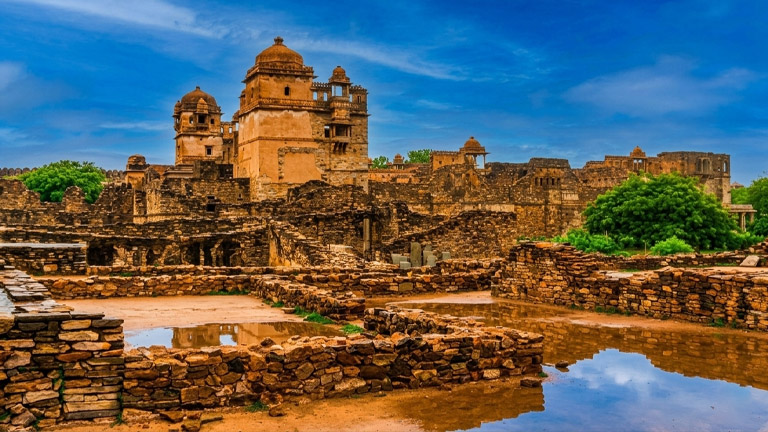
The architecture of Chittorgarh is a combination of defence, religion, royal life, and artistic expression.
The fort’s massive walls were designed for protection, while its gateways controlled movement into the settlement. Inside, palaces provided spaces for royal families, temples served religious communities, and towers commemorated important events.
Many buildings feature intricate stone carvings and decorative details.
The architecture also reveals the technological abilities of medieval craftsmen. Constructing large stone structures on a hill required careful planning, skilled labour, and knowledge of local materials.
The diversity of buildings makes Chittorgarh particularly valuable for understanding medieval Indian architecture.
A single visit to the fort can reveal military engineering, temple architecture, royal construction, sculpture, water management, and urban planning within the same historic landscape.
Chittorgarh and Maharana Pratap
The history of Mewar is incomplete without mentioning Maharana Pratap.
Maharana Pratap became one of the best-known rulers associated with resistance to Mughal expansion during the sixteenth century.
Although his most famous military campaigns were connected with other parts of Mewar, his story belongs to the larger history that followed the fall of Chittorgarh.
After Akbar captured Chittorgarh in 1568, the rulers of Mewar continued their political struggle from other strongholds.
Maharana Pratap later became a major symbol of Mewar’s independence and resistance.
His legacy continues to be remembered throughout Rajasthan and remains closely connected with the wider historical identity of Chittorgarh and Mewar.
From Political Capital to Historical Landmark
The fall of Chittorgarh in the sixteenth century changed the political history of Mewar.
The fort no longer served as the main political centre of the kingdom, and the rulers gradually established their power from other locations. Udaipur later became the principal capital of Mewar.
Despite losing its political role, Chittorgarh retained enormous cultural importance.
Its monuments continued to preserve memories of earlier rulers, battles, religious traditions, and royal life.
Over the centuries, the fort transformed from a centre of political power into one of Rajasthan’s most significant historical landscapes.
Its ruins became valuable records of a past that might otherwise have been known only through written accounts and oral traditions.
Chittorgarh’s Royal Heritage and Cultural Identity
Chittorgarh continues to play an important role in Rajasthan’s cultural identity.
The city’s monuments represent different sides of Mewar’s history. The fort reflects military power, the palaces represent royal life, the temples demonstrate religious traditions, and the towers preserve memories of historical events.
The stories associated with figures such as Rana Kumbha, Rani Padmini, Meera Bai, and Maharana Pratap have also contributed to the cultural image of the city.
However, these stories come from different types of sources, including historical records, oral traditions, and later literary works. Exploring them together allows visitors to understand how history and cultural memory develop over time.
Chittorgarh is therefore not simply a collection of old buildings. It is a place where architecture, history, legend, and cultural identity meet.
Why Chittorgarh Continues to Attract History Lovers
For anyone interested in Rajasthan’s royal history, Chittorgarh offers an unusually rich experience.
The city provides an opportunity to explore a historic fort while learning about the Mewar kingdom and the people associated with it.
History enthusiasts can discover the architectural achievements of Rana Kumbha, the legends surrounding Rani Padmini, the devotional legacy of Meera Bai, and the later history of Maharana Pratap.
Architecture enthusiasts can examine ancient towers, temples, palaces, gates, and defensive structures.
Those interested in culture can explore the traditions and stories that continue to shape the identity of Mewar.
The importance of Chittorgarh comes from this combination of history and cultural heritage.
Final Thoughts on Chittorgarh
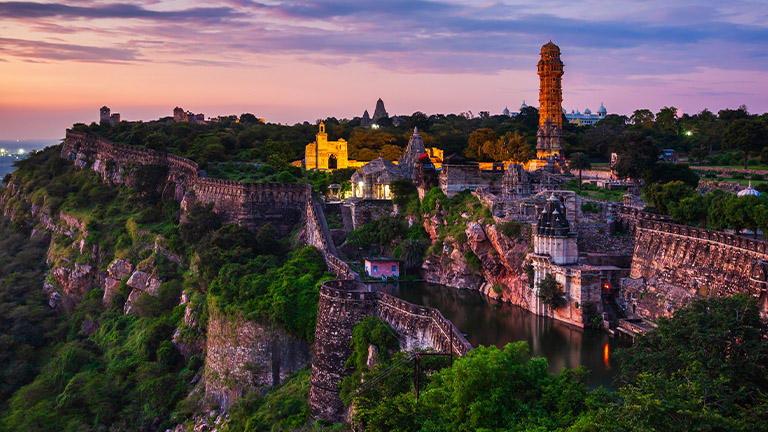
Chittorgarh is one of the most remarkable historical destinations in Rajasthan. Its enormous fort, ancient temples, royal ruins, monumental towers, and centuries-old stories provide a fascinating introduction to the history of Mewar.
The city witnessed periods of prosperity as well as devastating conflicts. Its rulers built impressive monuments, defended their kingdom through difficult periods, and left behind a cultural legacy that continues to influence Rajasthan.
From the architectural grandeur of Vijay Stambh and the religious significance of Kirti Stambh to the stories associated with Rani Padmini and the spiritual legacy of Meera Bai, Chittorgarh contains many different chapters of Indian history within one remarkable landscape.
Exploring Chittorgarh is therefore not simply about seeing an ancient fort. It is about understanding the people, traditions, beliefs, architecture, conflicts, and cultural memories that shaped Mewar.
For travellers who want to experience the deeper side of Rajasthan’s royal heritage, Chittorgarh offers a journey into a past that continues to live through its monuments and stories.