Evening take an exploratory walk around town and local market. Overnight at the hotel in Samdrup Jongkhar. (Altitude 280m)
Approved by the Ministry of Tourism, Government of India – Reg. No. : 270620263672
After breakfast, we visit the temple of Gom Kora, set on a small alluvial plateau, overlooking the river, 24 km from Trashigang. Gom Kora is a famous place, as Guru Rinpoche is said to have subdued a demon here, trapping it in a rock. We continue on down the road to Doksum village, where you may see women busily weaving traditional Bhutanese fabric. The road turns into the hills here, running up the side of a winding river valley to Trashiyangtse.
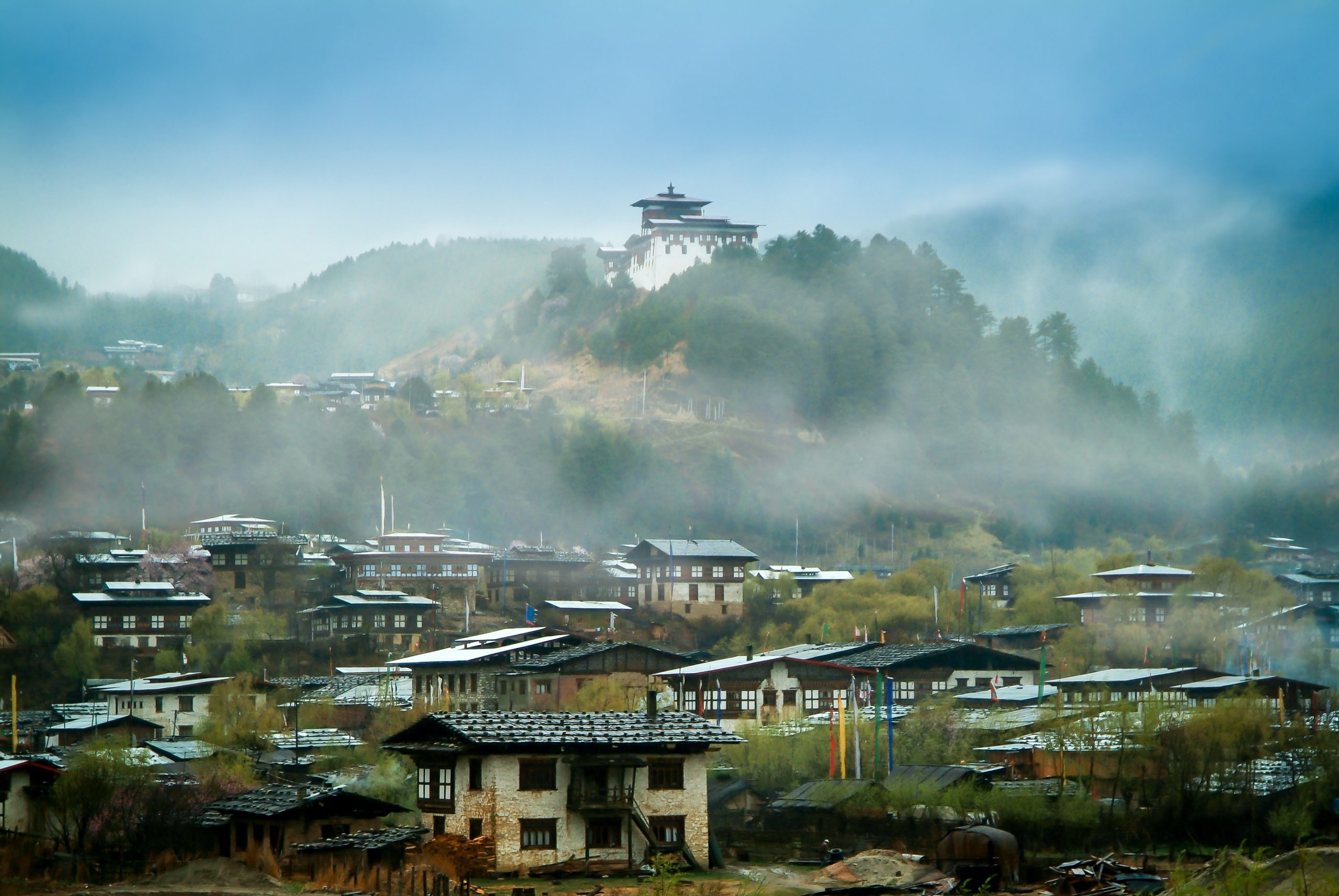
In former times, Trashiyangtse was an important center because it lies on one of the caravan routes leading from western and central Bhutan. Trashiyangtse is now a rapidly growing town and the administrative center for this district. The area is famous for its wooden containers and bowls, which make inexpensive, attractive and useful souvenirs of a visit to this remote region.
We will visit Trashiyangtse Dzong, which overlooks the town and was built in the late 1990s when the new district was created. If time permits, we will also visit the dazzling white stupa of Chorten Kora on the riverbank below the town.
Also visit Chorten Kora. This dazzling white stupa is situated on the riverbank below the town. Constructed in 1740 by Lama Ngawang Loday, it is built in the same style as Bodhnath stupa in Nepal, with eyes painted at the four cardinal points. During the second month of the lunar calendar there is an interesting celebration here, known as 'Kora'. Bomdeling A pleasant walk of about three hours from Chorten Kora, Bomdeling is an annual migration place for black-necked cranes, which fly over from nearby Tibet to pass the winter months in a warmer climate.
In the evening, we return to Trashigang.
Overnight at the hotel in Trashigang. (Altitude 1,150m).

En route take a detour to visit Drametse Lhakhang (about 45 min drive one way). Meaning, ‘the peak without enemy’, is one of the largest and most important monastery in eastern Bhutan, situated about 18 km away from Trashigang to Mongar highway. The lhakhang was founded by a highly accomplished Ani (nun) named Choten Zangmo in the 16th century, the granddaughter of the famous religious master Terton Pema Lingpa (the Treasure Discoverer). The lhakhang is deeply associated with Terton Pema Lingpa and the Peling tradition of Buddhism. It houses a full range of spiritual treasures and other sacred objects and is the source of spiritual inspiration to the people of Drametse and neighbouring communities.Drive onward to Mongar. It is site of one of Bhutan’s newest Dzong built in 1930s. Yet the Dzong is built in the same method and traditions of all the other Dzongs;
After breakfast embark on one of the most scenic journey to Bumthang. It is one of the most beautiful journeys in the Himalayas crossing 4,000m high Thrumshing la (pass). Gushing waterfalls, steep cliffs with even steeper drops, blazing flowers and constantly changing vegetation combine to make this journey as varied as it is beautiful.
En route visit fascinating Ura valley (3100m) which is highest of the four Bumthang valleys. Villages in Ura have clustered houses, which is quite unusual in Bhutan. Take a walk around beautiful village and also visit temple dedicated to Guru Rinpoche. Inaugurated in 1986, it contains a huge statue of the master and remarkable paintings of the cycle of his teachings. Over the last 35 years, Ura has been transformed from a marginal community to a prosperous valley.
Overnight at the hotel in Bumthang. (Altitude 2600m)
After breakfast visit Kurje Lhakhang, consisting of three temples. The one on the right was built in 1652 on the rock face where Guru meditated in the 8th century. Second temple is built on the site of a cave containing a rock with the imprint of Guru's body and is therefore considered the most holy. The third temple was built in 1990s by Ashi Kesang, the Queen Mother. These three temples are surrounded by a 108 chorten wall.
Then proceed to Jambay Lhakhang. This monastery was built in the 7th century by Tibetan King, Songtsen Gampo. It is one of the 108 monasteries built by him to subdue evil spirits n the Himalayan region. Its present architectural appearance dates from the early 20th century.
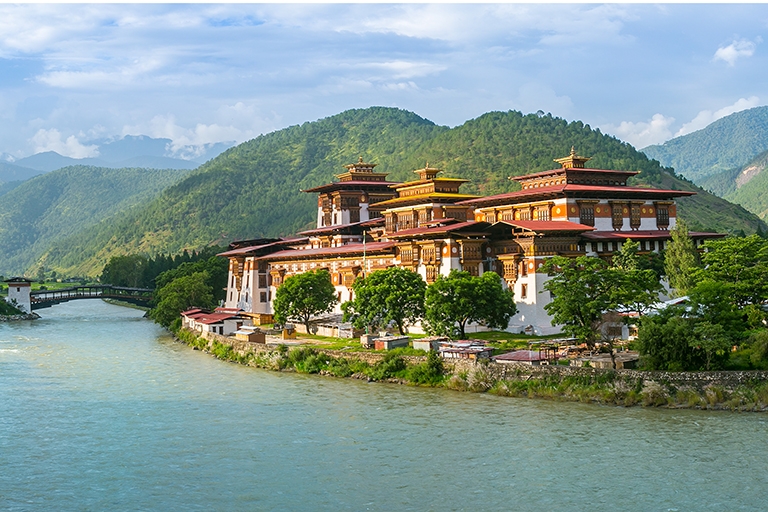
Jakar Dzong, founded by great grandfather of the first Shabdrung is next in sightseeing schedule. This Dzong was initially built as a monastery in 1549. It was upgraded after the Shabdrung had firmly established his power in 1646. The Dzong is now used as administrative centre for Bumthang valley, and houses the regional monk body
Afternoon drive across the River to Tamshing Lhakhang. Located across the river from Kurje Lhakhang, this temple was founded in 1501 by Terton Pema Lingpa, the re-incarnation of Guru Padmasambhava. The monastery has very ancient religious paintings like 1,000 Buddhas and 21 Taras (female form of Bodhisattva). The temple was restored at the end of the 19th century.
Evening visit to Lhodrak Kharchhu Monastery. Located above the main town, about 3 km from Chamkhar town, the monastery was founded by Namkhai Nyingpo Rinpoche in 1984 who was recognized at a very young age by H.H. the 14th Dalai Lama and H.H. 16th Karmapa as the reincarnation of a Tibetan lama whose spiritual lineage dates back to the nearest disciples of the great 9th century master. Since then the monastery has developed considerably with increase in number of monks to almost four hundred. The monastery has become part of an extensive effort to preserve and revitalize Tibetan culture.
Overnight at the hotel in Bumthang. (Altitude 2600m)

Visit the Trongsa Dzong. Built in 1648 it was the seat of power over central and eastern Bhutan. Both the first and second Kings of Bhutan ruled the country from this ancient seat. All four Kings were invested as Trongsa Penlop (‘governor ’) prior to ascending the throne, and the present Crown Prince now holds the post. The Dzong is a massive structure with many levels, sloping down the contours of the ridge on which it is built.
Then drive onto Gangtey, passing through dense forests of oak and rhododendron trees.


After breakfast transfer to the airport for flight to onward destination
CLOSING DAYS OF SOME OF MONUMENTS MENTIONED IN ITINERARY:
917,9th Floor, Tower-A, Nextra-The Address, Plot No. 4B, District Centre, Mayur Vihar Ph-1 Extension, New Delhi-110091
+91 11 43519903/ 43519904
info@ercotravels.com